Misinformation poses a particular threat at the political level. How can it be better identified? A team led by Prof. Dr Florian Töpfl is investigating this question as part of the EU Horizon Project POLINOCULATE.
The project examines responses from the far right in Germany to the Hamas massacres on October 7, 2023, and the war in Gaza. The focus lies on antisemitism and comparisons with other crisis phenomena.
How did self-proclaimed progressive circles react to Hamas' October 7 massacre? New research examines rising antisemitism in left-wing spaces – from anti-Israel demonization to the weaponization of social justice.
In a project funded by the bidt, researchers from the Universities of Passau and Bamberg are investigating how Russia is developing its own generative AI models under strict supervision and how authoritarian data affects AI systems in democratic systems.
How do citizens perceive AI-generated journalistic content on climate change? A team led by Professor Hannah Schmid-Petri, holder of the Chair of Science Communication at the University of Passau, is researching this question in a bidt-funded project.
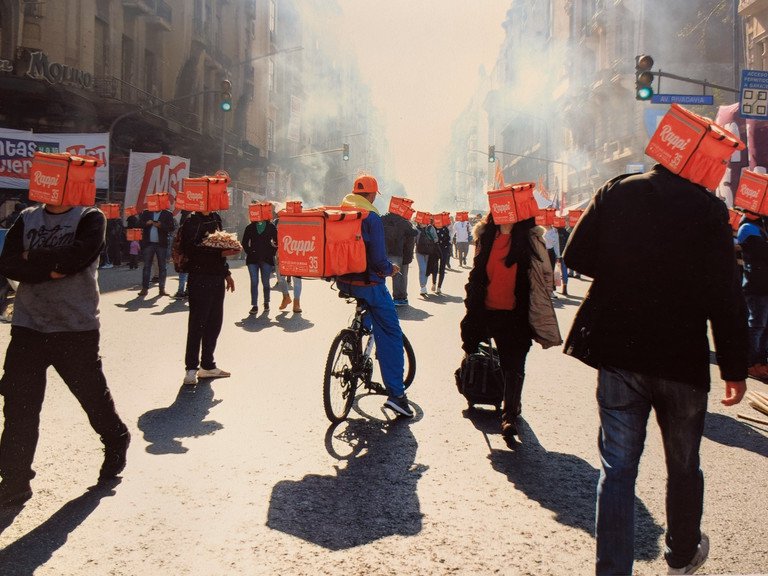
A team from the University of Passau, led by Professor Wolfram Schaffar, holder of the Chair of Development Politics, is investigating how digital platforms are changing the political landscape, particularly in the Global South.
Researchers across Europe have joined forces under the coordination of a team from the University of Passau to investigate persistent conspiracy beliefs. The researchers hope to gain new insights into how democracies can be made more resistant to conspiracy theories.
What is biodiversity? What role do our forests play in biodiversity? How is nature conservation realised in Europe and what is the role of national parks? An international Erasmus+ project has been addressing these questions since the end of 2023.
On account of COVID-19, the EU sees itself confronted by multiple legal and political tensions. How has society and politics changed, and how can the EU be supported in light of the ongoing challenges?
A large-scale study led by political scientist Professor Lars Rensmann from the University of Passau and sociologist Professor Heiko Beyer from Heinrich Heine University in Düsseldorf has shed light on the spread of antisemitic prejudice and resentment in society.



 Share this page